
Daily Reading
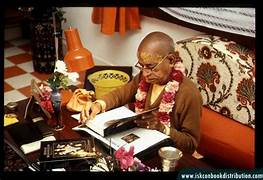
How To Love God
Puṣṭa Kṛṣṇa: Next question, Śrīla Prabhupāda. “As the world is coming to be divided into just two classes – atheist and theist – is it not advisable for all religions to come together? And what positive steps can be taken in this direction?”
Śrīla Prabhupāda: The steps to be taken have already been explained – this Kṛṣṇa consciousness movement. The atheist class and the theist class will always exist. This is the nature of the material world. Even at home – the father may be an atheist like Hiraṇyakaśipu, and the son a theist like Prahlāda. So atheists and theists will always exist – in the family, in the community, in the nation.
But the theists should follow the instructions of the Bhagavad-gītā and take shelter at Kṛṣṇa’s lotus feet, giving up other, so-called religious principles. That will bring religious unity. Religion without a clear conception of God is humbug, bogus. Religion means to accept the order of God. So if you have no clear conception of God, if you do not know who God is, there is no question of accepting His order. Find this verse in the Sixth Canto of Śrīmad-Bhāgavatam: dharmaṁ tu sākṣād bhagavat-praṇītam
Hari Śauri:
dharmaṁ tu sākṣād bhagavat-praṇītam
na vai vidur ṛṣayo nāpi devāḥ
na siddha-mukhyā asurā manuṣyāḥ
kuto nu vidyādhara-cāraṇādayaḥ
“Real religious principles are enacted by . . .”
Śrīla Prabhupāda: Ah. “Real.” Go on.
Hari Śauri: “Real religious principles are enacted by the Supreme Personality of Godhead. Although fully situated in the mode of goodness, even the great sages who occupy the topmost planets cannot ascertain the real religious principles, nor can the demigods or the leaders of Siddhaloka, to say nothing of the demons, ordinary human beings, Vidyādharas, and Cāraṇas.”
Śrīla Prabhupāda: Hm. Read the next verses also.
Hari Śauri:
svayambhūr nāradaḥ śaṁbhuḥ
kumāraḥ kapilo manuḥ
prahlādo janako bhīṣmo
balir vaiyāsakir vayam
dvādaśaite vijānīmo
dharmaṁ bhāgavataṁ bhaṭāḥ
guhyaṁ viśuddhaṁ durbodhaṁ
yaj jñātvāmṛtam aśnute
“Lord Brahmā, Bhagavān Nārada, Lord Śiva, the four Kumāras, Lord Kapila [the son of Devahūti], Svayāmbhuva Manu, Prahlāda Mahārāja, Janaka Mahārāja, Bhīṣmadeva, Bali Mahārāja, Śukadeva Gosvāmī, and I myself [Yamarāja] know the real religious principle. My dear servants, this transcendental religious principle, which is known as bhāgavata-dharma, or surrender unto the Supreme Lord and love for Him, is uncontaminated by the material modes of nature. This transcendental religious principle is very confidential and difficult for ordinary human beings to understand, but if by chance one fortunately understands it, he is immediately liberated, and thus he returns home, back to Godhead.”
Śrīla Prabhupāda: So these mahājanas – Brahmā, Nārada, Lord Śiva, and so on – they know what the principles of religion are. Religion means bhāgavata-dharma, understanding God and our relationship with God. That is religion. You may call it “Hindu religion” or “Muslim religion” or “Christian religion,” but in any case, real religion is that which teaches how to love God. Sa vai puṁsāṁ paro dharmo yato bhaktir adhokṣaje: if by following some religious system you come to the platform of loving God, then your religious system is perfect. Otherwise, it is simply a waste of time – bogus religion, without a clear conception of God. So we have to understand what God is and what He says, and we have to abide by His orders. Then there is real religion, there is real understanding of God, and everything is complete.
Puṣṭa Kṛṣṇa: Śrīla Prabhupāda, one may ask why someone like Christ or Moses is not mentioned among the mahājanas.
Śrīla Prabhupāda: There are mahājanas among the Christian saints. They include Christ, and in addition to Christ, so many others – St. Matthew, St. Thomas, and so forth. These mahājanas are mentioned in the Bible. A mahājana is one who strictly follows the original religion and knows things as they are. And that means he must be coming in the paramparā, the system of disciplic succession.
For instance, Arjuna learned Bhagavad-gītā directly from Kṛṣṇa. Therefore Arjuna is a mahājana. So you should learn from Arjuna. You follow the way Arjuna acted and the way Arjuna understood Kṛṣṇa. Then mahājano yena gataḥ sa panthāḥ: you are following the mahājana – you are on the real path. Just as we are. In these verses from Śrīmad-Bhāgavatam is a list of mahājanas, including Svāyambhu, or Lord Brahmā. So this sampradāya of ours is called the Brahma-sampradāya. Our sampradāya also includes Nārada, another mahājana. Sambhu, or Lord Siva, is still another mahājana. He has his own sampradāya, the Rudra-sampradāya. And similarly, Lakṣmī, the goddess of fortune, has the Śrī-sampradāya.
This is an excerpt taken from the book Civilization and Transcendence, click here to read rest of the chapter.